Loading... Please wait...

Testimonials

  • Lisa W.
    Research Associate

    "I have found the
    MOS advanced electroporation system to be a wonderful asset to my laboratory for high throughput screening of antisense oligonucleotides, including siRNA…"(more)


  • Dr. Branden N.
    Dept. of Biological Structure

    "This type of technology will allow researchers to bridge the gap between functional genomic screens and validation of candidate gene function in primary cells…"(more)

  • Darren H.

    "Just used the electroporator for the first time this week and it worked perfectly for the transfection of your HCV RNA into our cell line."(more)


  • Marianna G.

    "Thanks so much, you are the best tech support person I’ve ever encountered!"(more)


  • John C.

    "The information you provided was very helpful, the best I’ve received since I purchase the ECM2001 2 years ago."(more)


  • Wei G.

    "Thank you very much for your technique support, our electrofusion has great improvement and great success now (I have been bothered by too many clones :D)."(more)


  • Jennifer M.

    "We have found the electrofusion to be almost too good and we are getting a lot of hybridomas, it’s a good place to be we just need to work out how to deal with the increased efficiency."(more)


Our Newsletter


  • Electroporation Systems
    BTX Systems for Transfection and Transformation applications for in vitro and adherent cells
  • Buffers
    Providing buffers designed to handle a variety of electroporation and electrofusion applications
  • Electrofusion Systems
    These systems are designed to handle numerous cell fusion applications from small volumes to large scale production
  • In Vivo Transfection
    BTX are the experts for in vivo and ex vivo transfection with specially designed systems and electrodes
  • Electrodes & Accessories
    BTX provides a variety of speciality electrodes and accessories to target in vivo, in vitro and fusion applications
  • Monitoring System
    Monitoring experiments for quality control and troubleshooting critical parameters during electroporation


Electroporation
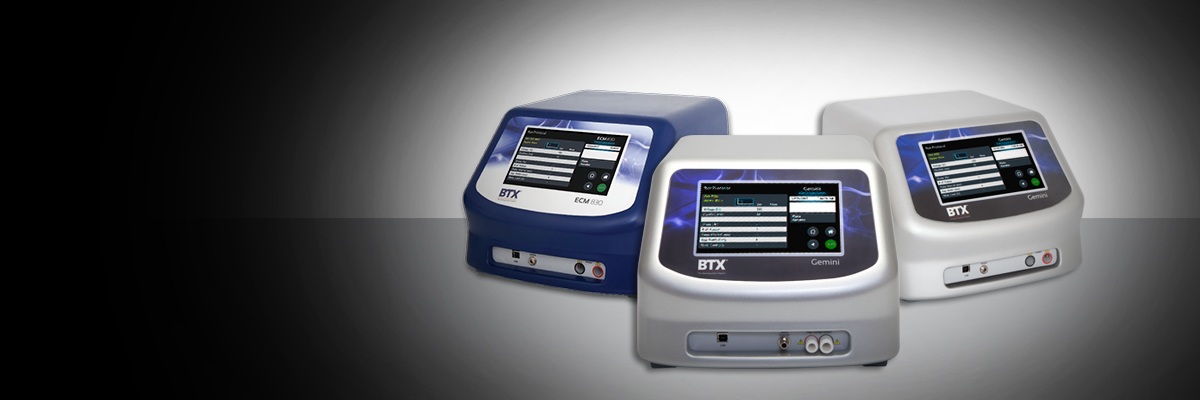
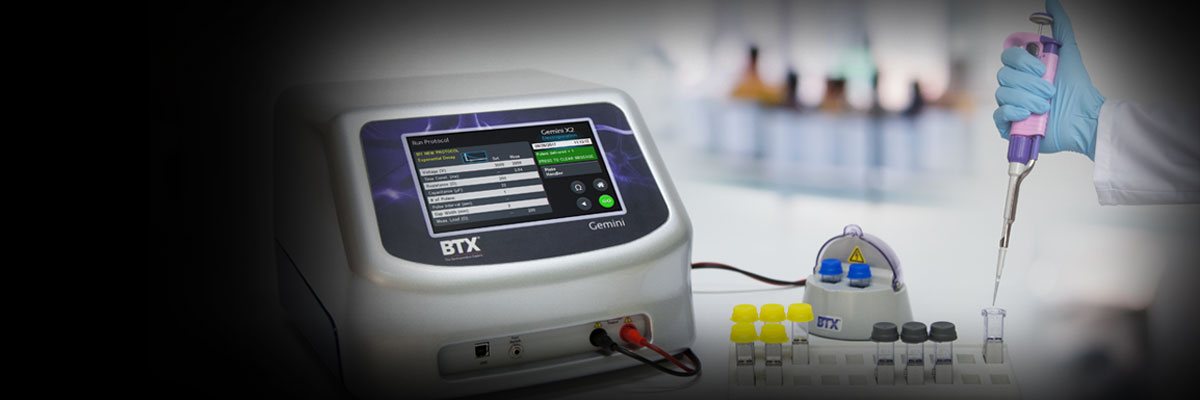
BTX, the electroporation experts, offers a selection of electroporation and electrofusion generators, specialty electrodes, cuvettes and accessories to help researchers achieve high transfection efficiencies even for difficult to transfect cells.

In Vivo Electroporation
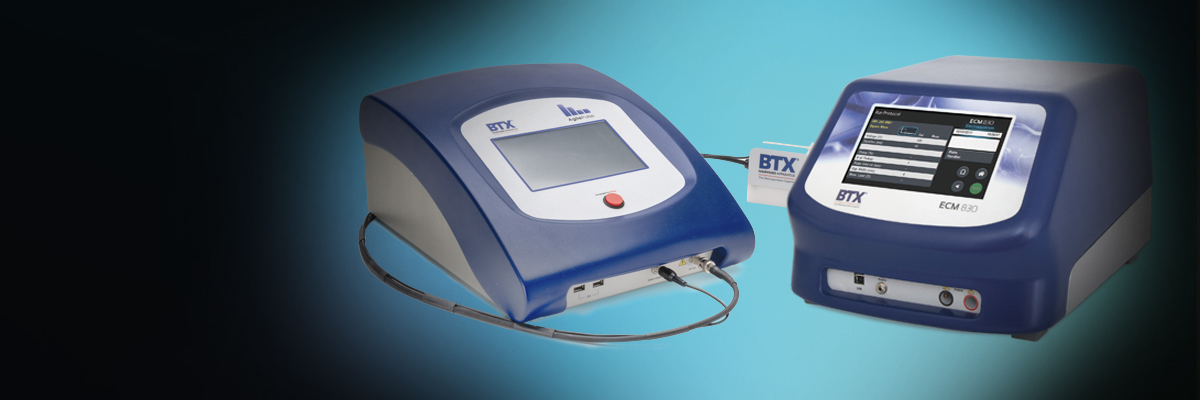
BTX’s wide variety of specialty electrodes accommodates advanced applications such as electrochemotherapy or standard in vivo applications such as inter-muscular or intra-dermal transfection.  Furthermore, DNA vaccine research has relied heavily on electroporation technology because of the proven success of applying multiple, low voltage pulses to the dermal layer, which is immunologically active by the abundant presence of dendritic antigen-presenting cells and Mesenchymal origin cells. Gene expression in skin is 100-fold higher when delivery is enhanced by electroporation.1 The ECM 830 Square Wave electroporation system or the Agile Pulse in vivo system are ideal systems for these applications.

High Throughput Electroporation
The HT Systems are a multi-well approach to electroporation in either 25 or 96 wells.  These high throughput systems were specially designed and patented by BTX, Harvard Apparatus and are essential to labs looking for any of the following benefits: Saving time by optimizing protocols very rapidly; Boosting productivity by varying electrical parameters and also biological parameters; Saving money by using less sample volume (less waste product by allowing use of less sample volume); Quickly and efficiently screening entire libraries.

Electrofusion
Electrofusion is the most advanced method of achieving cell fusion. PEG (poly-ethylene-glycol)-induced fusion is the most common procedure but has since been outdated by the superiority of electrofusion over PEG. PEG is highly toxic to cells and unreliable since the success of a fusion depends on many variables such as the size and shape of the pellet and method by which PEG is stirred into the resuspended cell pellet. The method is time consuming and the yields are poor. In comparison, considerably higher efficiencies for many cell types are possible with electrofusion. Hybrid yields are up to 80-fold over PEG-mediated fusion.2 In addition, electrofusion allows for better reproducibility, significantly lower amount of B cells are required compared to PEG and electrofusion is fast and easy-to-use; multiple fusions can be performed in a short period of time. This method is especially useful for hybridoma applications using human, rat, mouse and rabbit immune cells for monoclonal antibody generation. Finally, electrofusion is ideal for many other cell fusion applications including nuclear transfer, dendritic and tumor cell fusions to generate tumor vaccines, generation of 2-cell embryo fusions, and for plant protoplast work. BTX offers two systems for hybridoma production. Both systems operate in a similar format, utilizing a tri-phasic sequence of programmed pulses. The Hybrimune™ System is an advanced electrofusion solution for fast, efficient cell fusion in hybridoma production, hybrid cell formation or nuclear transfer applications. The Hybrimune™ System includes an innovative fusion chamber design, proprietary Cytofusion® medium and sophisticated, tri-phasic electric field pulses that quickly position cells and disrupt cell membranes for maximum cell fusion efficiency with short cycle-times and minimal heating or turbulence for excellent cell viability. The ECM 2001 System is a multipurpose pulse generator system capable of performing both electrofusion for hybridoma production, hybrid cell formation and nuclear transfer applications in addition to electroporation of cells in suspension and in vivo applications.

Microinjection
Microinjection is performed, observed and controlled under a microscope. BTX offers the MicroJect 1000 (MJ 1000),  a versatile injection system, providing the consistency and reliability to deliver precise volumes ranging from femtoliters to microliters through a stable compressed gas mechanism for a set duration of time. The MJ 1000 is designed to maximize your potential with key injection features including: Fill, Hold, Clear and Balance.

Electroporation and Electrofusion Buffers
BTXpress High Performance Electroporation buffer is a single buffer solution developed to quickly and efficiently deliver genes into mammalian cells that were previously considered “hard to transfect” by chemical and other non-viral methods. This solution, in combination with the BTX electroporation instruments, provides researchers with the versatility and success desired with a broad range of cell types while maintaining critical cell viability. Cytofusion Medium C is an advanced electrofusion buffer designed for use with the BTX Hybrimune™ System and ECM 2001 System for high performance cell fusion applications. The low conductivity buffer is specially-formulated to minimize cell turbulence during cell alignment and heating during electrofusion for robust cell fusion efficiency and high cell viability.

[1] Roos, A-K, et al., 2006 Molecular Therapy 13(2):320-327.

[2] Radomska, H. et al., Mammalian Cell Fusion in an Electroporation Device, 1995, Journal of Immunological Methods